What to expect
Your first month of climbing will be some of the fastest progress you ever make. You’ll also meet some surprises: sore forearms, tired fingertips, muscles you didn’t know you had. That’s normal. This guide gives you a realistic plan so you can enjoy the sport and stay healthy.
The key idea: muscles adapt fast, tendons and skin adapt slowly. You will feel stronger within a couple of weeks, but your fingers and elbows need longer. Climb often enough to improve, and rest enough to recover.
A simple warm-up (five to ten minutes)
- Walk or jog gently, or do light skipping, to raise your heart rate.
- Circle your shoulders, wrists and ankles.
- Do a few easy arm swings, hip openers and leg swings.
- Spend several minutes on the easiest climbs available, moving slowly and using your feet.
- Move up in difficulty gradually. Don’t start on your hardest problem.
Week by week
Week 1: Learn the basics
Complete your induction and climb two sessions, ideally with a day or two of rest between them. Focus on easy problems, where your feet go and how to fall safely. Don’t worry about grades. Consider a beginner session if you want guidance.
Week 2: Use your feet
Two to three sessions. Try the exercise “silent feet”: place each foot carefully on its hold without making noise. Climb with straight arms where you can, hips close to the wall. Notice how much easier climbs feel.
Week 3: Explore styles
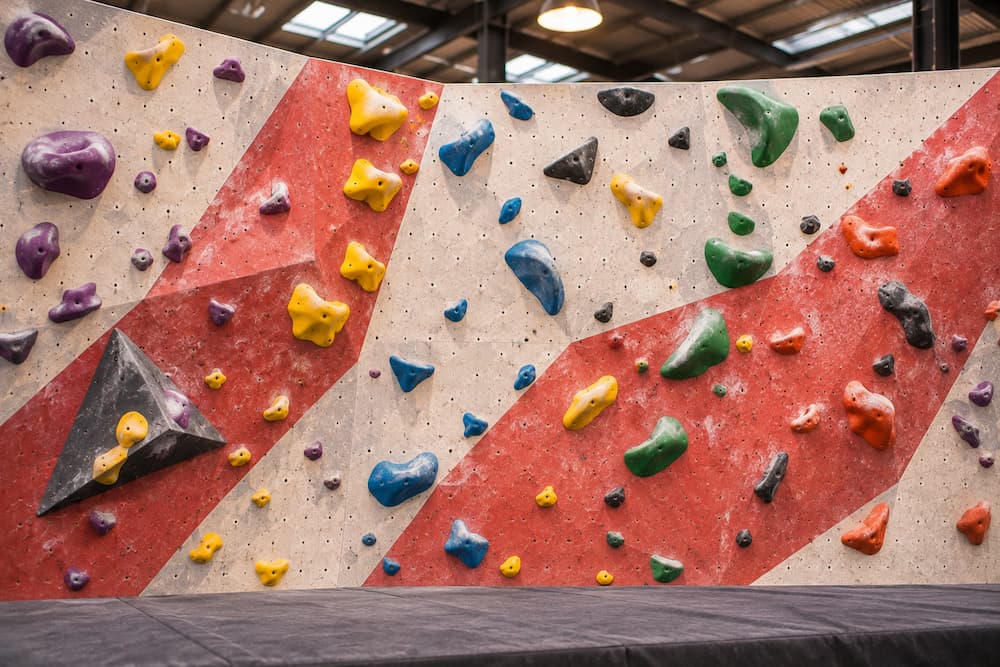
Try different wall angles: slab, vertical and gentle overhang. Each demands something different. If you’re curious about ropes, try an auto-belay or a roped intro. Rest if your fingers feel tender.
Week 4: Set a goal
Pick a small goal, like finishing five problems at your level, or climbing a route without resting. Retry climbs you couldn’t complete earlier. Compare how you move to week one.
Why your forearms burn (and what to do)
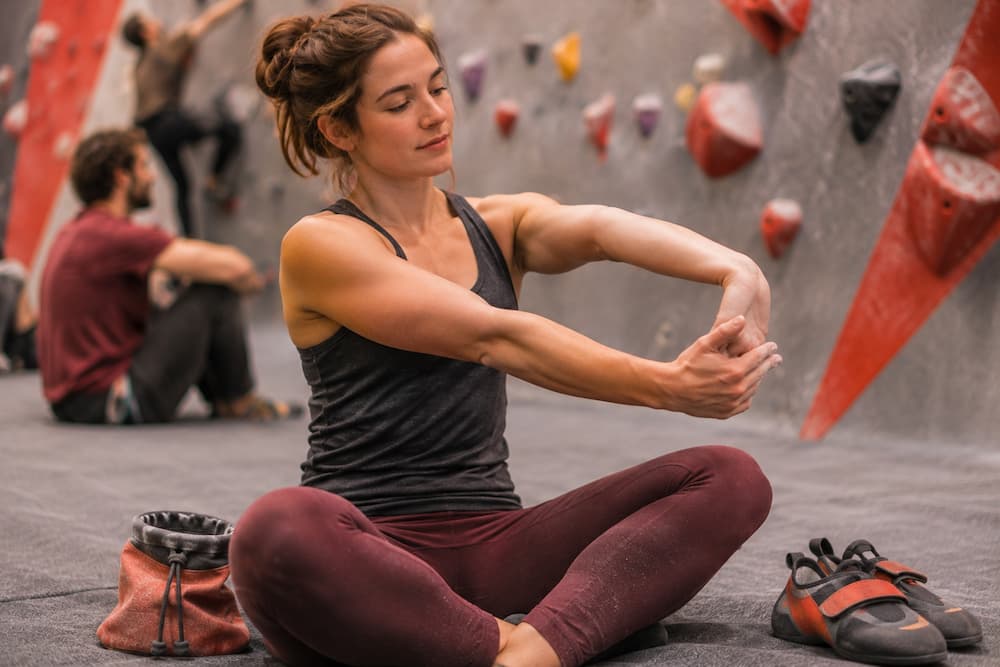
That burning, tight feeling in your forearms is called the “pump”. It happens because gripping tightly restricts blood flow, so waste products build up faster than they clear. Beginners usually grip far harder than needed. To manage it:
- Relax your grip. Hold as lightly as you can while staying on.
- Shake out. On good holds, drop one arm and shake it gently to restore blood flow.
- Straight arms. Hang off your skeleton, not your biceps.
- Breathe. People hold their breath when they’re nervous, which makes the pump worse.
- Rest between climbs. Allow a few minutes between attempts.
Fingers, skin and rest
- Rest days are part of training. Two sessions a week with a rest day between is plenty for a beginner. Progress to three if you feel good.
- Protect your skin. Wash and dry your hands after climbing, and moisturise at night. File any rough edges or tears; ragged skin tears more.
- Mind your fingers. Stop if you feel a sharp pain in a finger joint or tendon. Pain that lingers for days needs rest, and a doctor’s advice if it continues.
- Avoid hard moves on small holds before your fingers are used to climbing.
- Eat and drink well. Climbing burns more than you think.
Warning signs
Sharp pain, swelling, or a “pop” in a finger or joint are reasons to stop and get medical advice. Don’t climb through pain.
Common beginner mistakes
- Over-gripping. Squeezing the holds far harder than needed.
- Pulling with the arms. Your legs are much stronger: push with them.
- Ignoring feet. Look at your feet, place them deliberately and stand on the toes.
- Hips away from the wall. Keep your hips close, especially on vertical walls.
- Climbing too hard, too soon. It’s easy to get hurt. Climb lots of easy routes first.
- Skipping rest. More isn’t always better. Rest is when you adapt.
What comes next
After your first month, you’ll have a feel for what you enjoy. Maybe you love bouldering and want to learn technique. Maybe you’d like to try ropes with a friend. Our adult classes cover improvers courses, technique workshops, learn to belay and a lead climbing intro, and private coaching is there if you’d like personal feedback. If you’d rather keep things informal, a pass or membership makes regular climbing cheaper.
Practise it with us
Reading about climbing helps, but instruction makes it stick. Try a beginner session, join an adult class or ask about private coaching. These guides are general information and are not a substitute for instruction: always follow the centre rules and staff instructions.