Why shoes matter more than almost any other kit
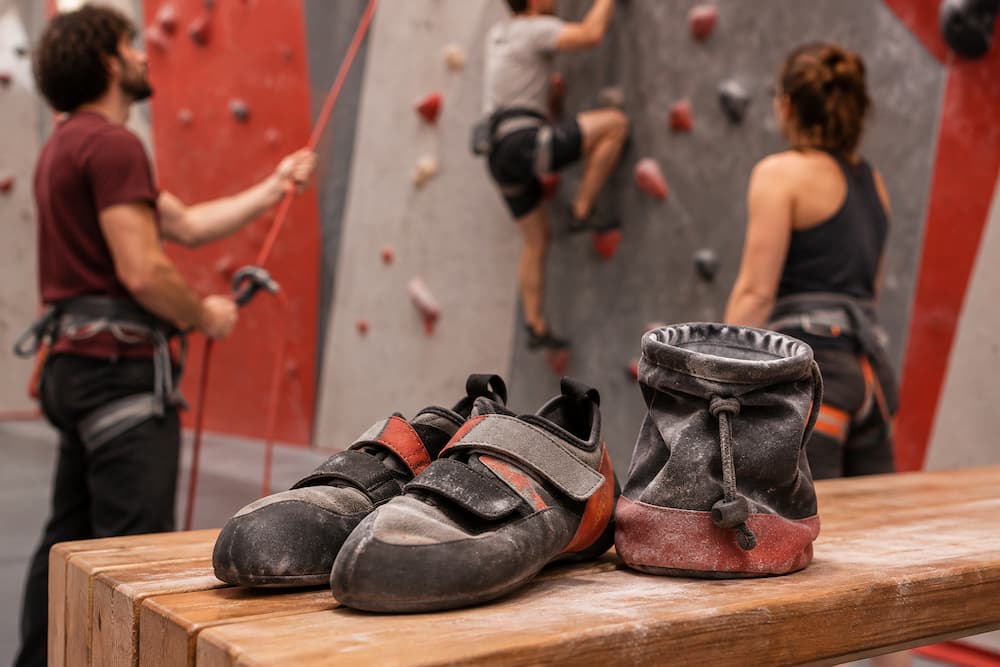
Climbing shoes are the one piece of equipment that changes how you move. A good pair lets you stand confidently on small footholds, feel the wall under your toes and push with your legs instead of hauling with your arms. A poor pair does the opposite: it hurts, it slips and it makes every climb feel harder than it should.
That’s why it’s worth taking time over your first purchase, and why we suggest you don’t buy at all until you’ve climbed a few times.
Start by hiring
When you start, hire shoes at the centre (£3.50 per visit). Rental shoes are usually comfortable, forgiving and durable. Hiring for your first few sessions teaches you what climbing shoes feel like, how snug they should be and what you like and dislike, long before you spend money on your own.
A good moment to buy is when you’re climbing once or twice a week and finding rental shoes less comfortable, less precise or simply less fresh. By then you’ll also know your preferences about fit.
Getting the fit right
Climbing shoes should fit much more snugly than trainers. That’s deliberate: a tight shoe stops your foot sliding around and lets you feel small holds. But snug isn’t the same as painful.
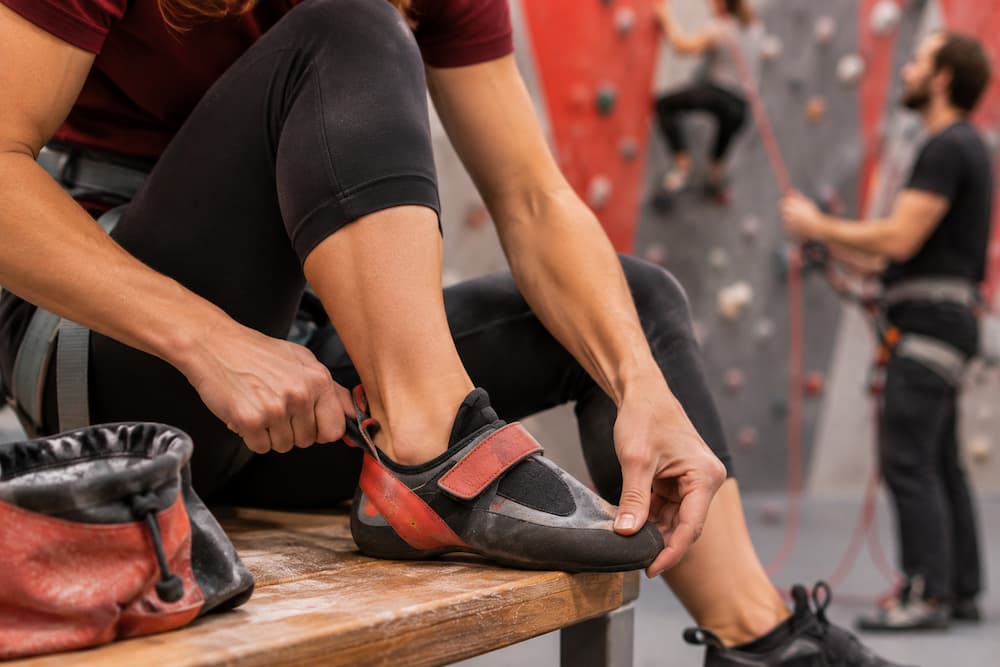
- Toes: they should lightly touch the end of the shoe. Beginners shouldn’t force their toes into a deeply curled position. If your toes are crushed and you can’t stand on them, the shoe is too small.
- Heel: it should sit firmly in the heel cup, with no gap and no lifting when you pull on the shoe.
- Forefoot: there should be no dead space where your foot can slide around, and no sharp pressure points.
- Overall: you should be able to wear them for a full session with a few breaks. Pain that makes you want to take them off after ten minutes means the shoe is wrong, not that your feet are weak.
Materials matter too. Leather shoes stretch with wear (often up to about a size), while synthetic shoes stretch much less. Unlined leather stretches the most. If you buy leather shoes, allow for some stretch; for synthetic, buy the fit you want.
Shape, stiffness and closure
Flat, neutral
Comfortable for long sessions and all-round climbing. A sensible first pair for most beginners.
Moderate downturn
A slightly curved shape that helps on steeper walls and smaller holds, while staying comfortable.
Aggressive
Strongly downturned and often tight. Powerful on steep, technical climbs; usually not for beginners.
Stiffness. Soft shoes let you feel the wall and smear on features. Stiffer shoes support your feet on small edges and reduce fatigue. Beginners often benefit from a mid-stiffness shoe because it’s forgiving on small holds.
Closure. Velcro shoes are quick to take on and off between climbs, which suits bouldering. Lace-ups let you adjust the fit over the whole foot and suit long routes. Slipper shoes are flexible and sensitive but need a good fit and some foot strength.
A sizing routine that works
- Try shoes on in the afternoon or after climbing, when your feet are at their largest.
- Try on at least three models, and compare different sizes in the same model.
- Stand on your toes on a small edge, if the shop allows it, and check you’re not slipping inside the shoe.
- Wear them around for ten minutes. Note any pressure points that don’t ease.
- Remember that brands size differently. Ignore the number on the box and trust the feel.
Hiring vs buying
If you climb less than once a week, hire is perfectly good. Buy when you’re climbing regularly and you know what feels right. Our shoe hire is £3.50 per visit; staff can help you choose a comfortable fit.
Looking after your shoes
- Take them off between climbs: your feet will be more comfortable and the shoes last longer.
- Let them dry and air after a session. Avoid leaving them in a hot car or a damp bag.
- Don’t walk around outside in them. Grit damages the rubber.
- Wipe the soles before you climb if they’re dusty or dirty, and keep them clean to stay grippy.
- When the rubber is worn thin at the toe, resoling can extend their life, if the upper is still in good shape.
Quick checklist
- Snug but not painful; no heel lift; no dead space.
- Neutral or mildly downturned shape for a first pair.
- Hire first, buy once you’re climbing regularly.
- Try before you buy and compare several models.
- Look after them and they’ll look after your feet.
Practise it with us
Reading about climbing helps, but instruction makes it stick. Try a beginner session, join an adult class or ask about private coaching. These guides are general information and are not a substitute for instruction: always follow the centre rules and staff instructions.