Indoor climbing is one of the safest ways to start climbing, but it still carries real risk. Most accidents are preventable and come down to a handful of habits. Here are the unwritten rules that keep a busy climbing hall friendly and safe, and the reasons behind them.
Falling and landing
You will fall off. Everyone does. How you fall is what matters.
- Look before you climb. Check the landing area is clear of people and bags before you leave the floor.
- Land on both feet, knees bent. Let your legs absorb the impact, as though you’re jumping down from a step.
- Roll if you need to. If you fall backwards or sideways, let your body roll along the mat rather than stopping dead.
- Never reach out with a straight arm. Landing on an outstretched hand is a classic cause of wrist and elbow injuries.
- Climb down when you can. If the top of a problem is too far to jump safely, down-climb to a height you’re comfortable dropping from.
- Move out of the way. After landing, step away from the base so the next person isn’t landing on you.
Your induction covers falling on the mats. If you’re unsure, ask staff to show you again: it’s always worth it.
Sharing the space
Bouldering areas are shared. Everyone is moving, falling and walking around, so awareness is vital.
- Never walk under someone who’s climbing. Wait until they’ve finished.
- Don’t climb above or below someone. A falling climber lands on whatever is beneath them.
- Keep the landing zone clear. Don’t sit, stand or leave bags and water bottles on the mats.
- Take turns. Give each other room and don’t hog a popular problem. Rest away from the base.
- Keep your head up. Watch where people are climbing as you walk through.
- Walk, don’t run. Especially around children.
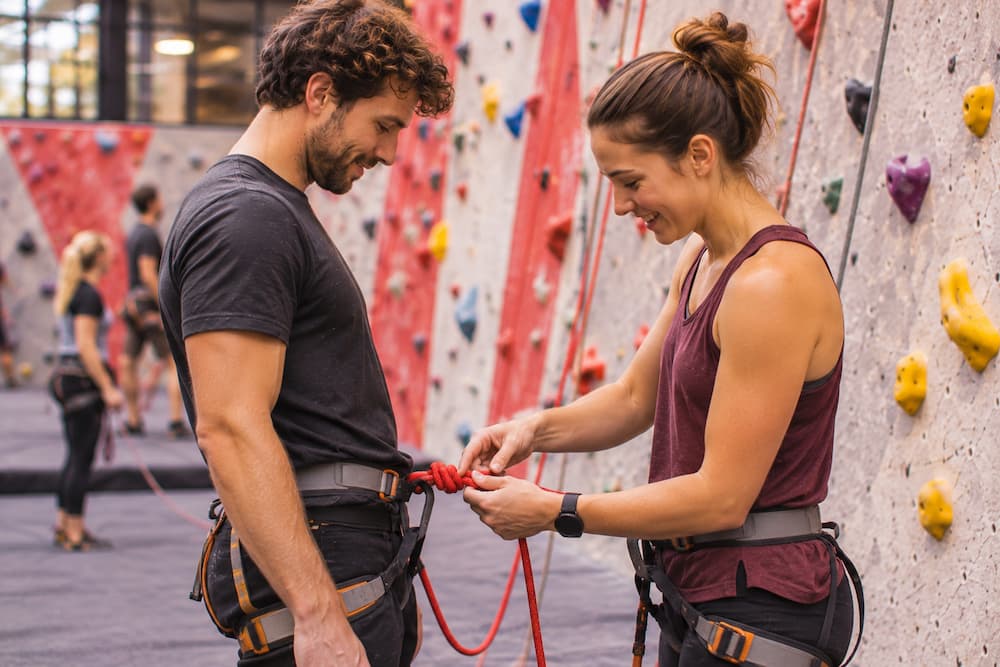
Roped climbing habits
When you climb on rope, safety depends on a system: a climber, a belayer, a rope, a harness and a belay device. A mistake in any one part can cause serious injury, so we build habits that catch mistakes before they matter.
- Do a partner check every time. Before every climb, check each other’s harness is fastened correctly as the manufacturer instructs, the rope is tied in properly, and the belay device is set up correctly with the rope threaded the right way.
- Belayers keep the brake hand on the rope. Always. Even when you’re lowering. Never let go.
- Stay focused. A belayer’s job is to watch the climber. No phones, no chatting while someone is climbing.
- Use clear communication. Agree commands such as “climbing”, “take” and “lower” and follow them.
- Check the ground. Make sure no one is in the area under the rope, and nothing is tangled before the climber leaves the floor.
- Pass the belay check. If you’re new to belaying, take a course and complete our belay check. Our minimum belaying age is 14.
Why partner checks matter
Accidents in indoor climbing centres worldwide have included climbers who set off without being tied in properly or without the belay device threaded correctly. A thirty-second check is the single best habit you can build.
Auto-belays
Auto-belays are convenient, but they still need attention:
- Check the line is smooth and untwisted, and the device retracts properly before you clip in.
- Clip in correctly and check the karabiner is closed and locked.
- Never climb above the device’s clip or start climbing with a slack line.
- One person at a time. Don’t unclip until your feet are on the ground.
- Follow the minimum age and weight limits shown on the device.
Children and supervision
Children are keen and fearless, which is wonderful and sometimes risky. At UCLIMBING, children under 8 must be directly supervised by an adult in reach, and children under 14 need an adult in the centre who supervises them. Please keep an eye on your own child: staff can’t watch every child in the hall. See the kids and teens page.
Looking after yourself
- Warm up. Start with easy climbs and light mobility work before you try anything hard.
- Listen to pain. Sharp pain in a finger, elbow or shoulder is a sign to stop.
- Rest and hydrate. Tired climbers make mistakes and get hurt.
- Tell us about injuries. Staff can suggest alternatives, and need to know if you’ve hurt yourself on the wall.
- Remove jewellery. Rings, bracelets and watches catch on holds.
Everyday manners
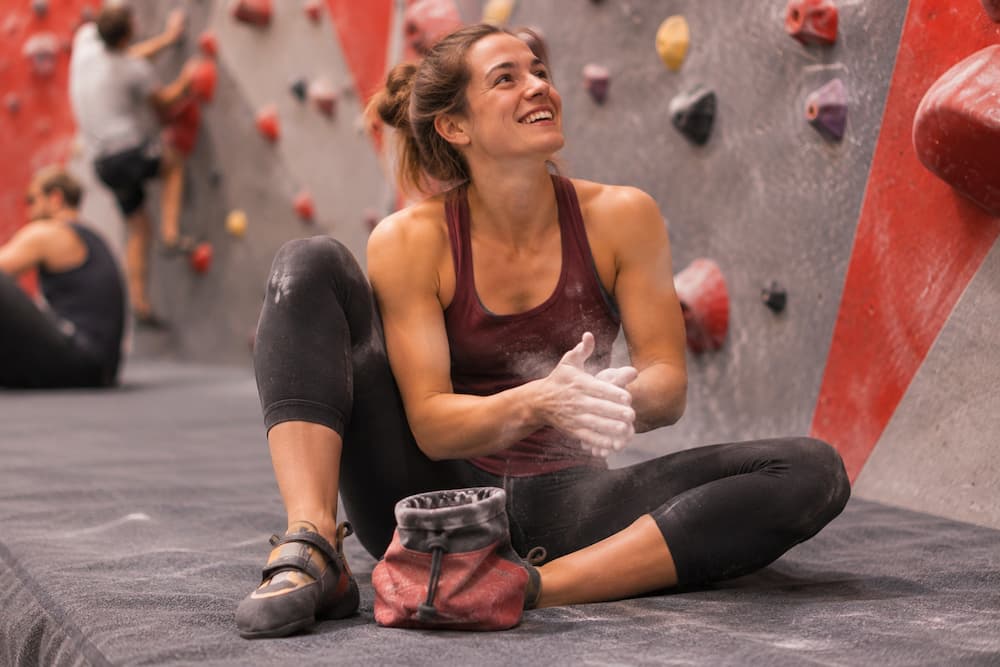
- Brush chalk off holds when you’ve finished, and use chalk sparingly.
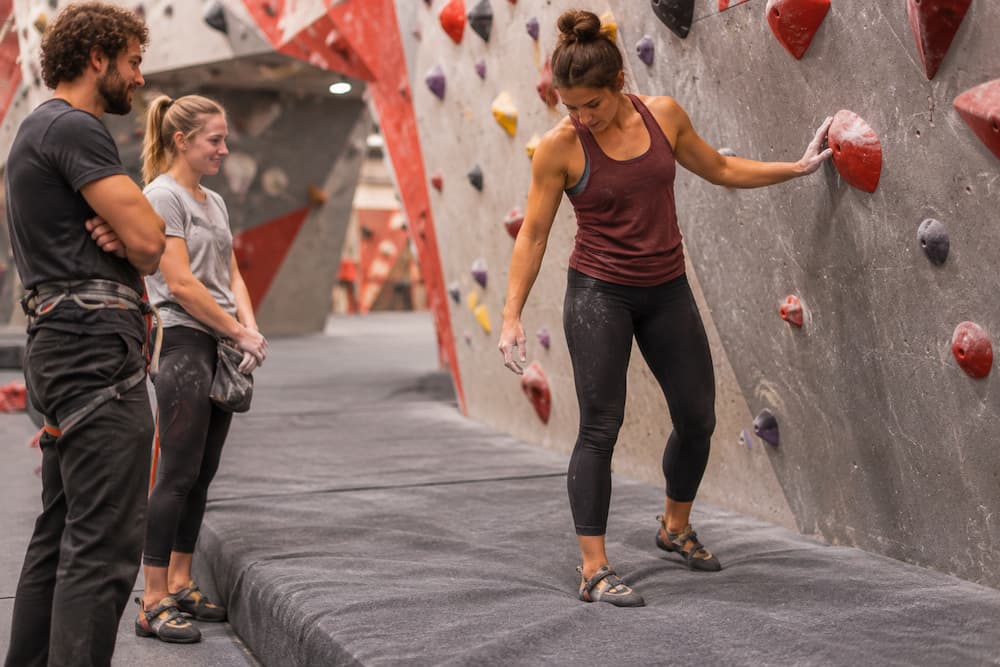
- Give people space, and don’t give unrequested advice. Ask before you offer beta (route tips).
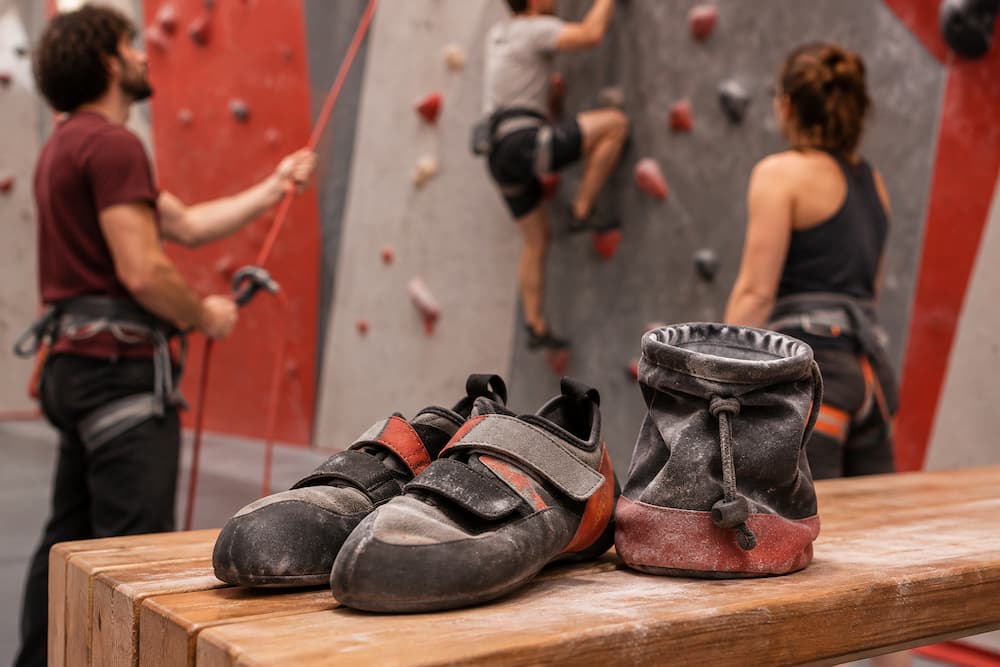
- Keep bags, shoes and chalk off the mats.
- Be patient with beginners. Everyone started somewhere.
- Follow staff instructions, always.
Practise it with us
Reading about climbing helps, but instruction makes it stick. Try a beginner session, join an adult class or ask about private coaching. These guides are general information and are not a substitute for instruction: always follow the centre rules and staff instructions.