Three ways to climb tall walls
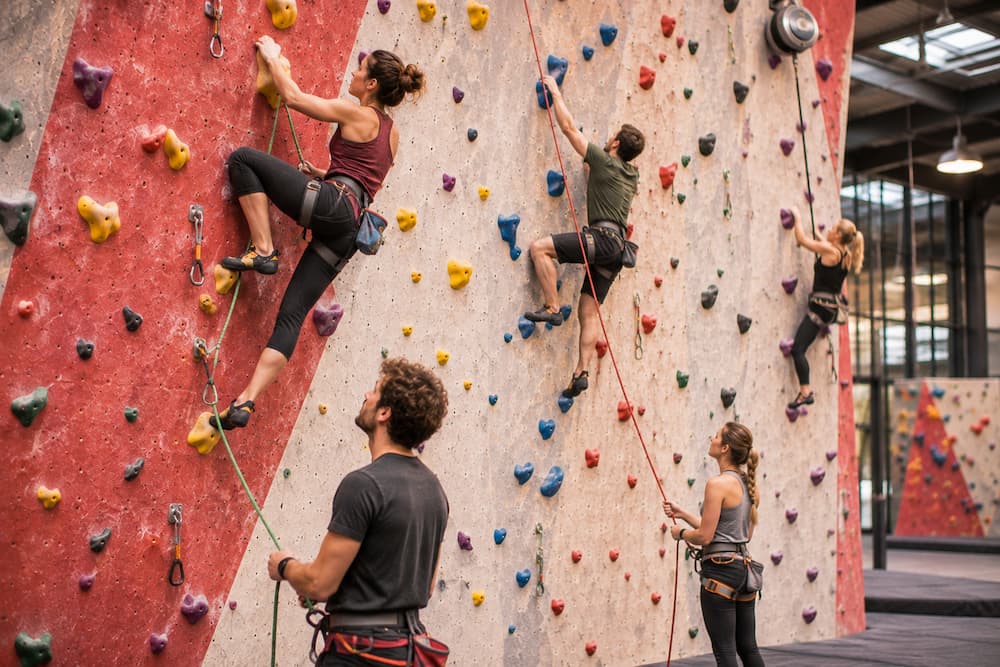
When a wall is too tall to boulder safely, climbers use ropes. In an indoor centre there are three main ways to do it, each with its own skills, risks and appeal.
Top-rope
The rope runs up through an anchor above you and back down to your belayer. Falls are short. Needs a partner who can belay.
Lead
You carry the rope up the wall and clip it into protection points as you go. Falls are longer. Needs a lead check and a trained belayer.
Auto-belay
A device on the wall takes up the rope as you climb and lowers you when you let go. No partner needed.
Top-rope climbing
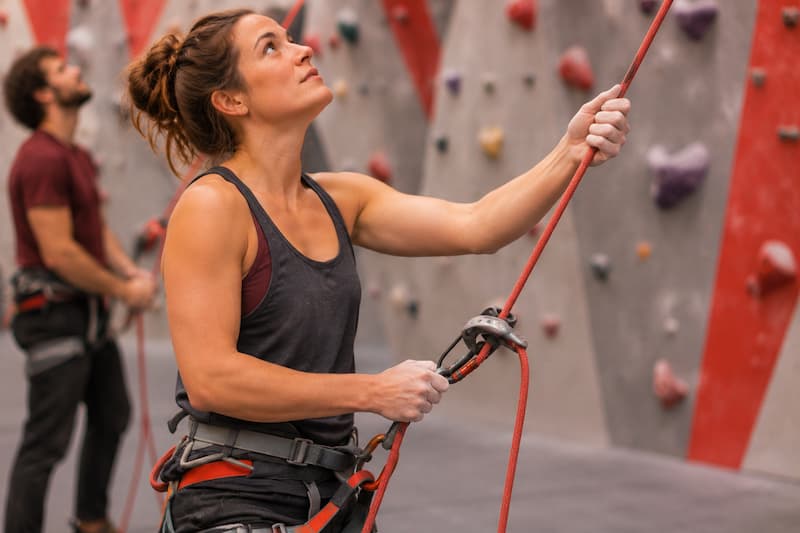
Top-roping is the usual first step for roped climbers. The rope is already threaded through an anchor at the top of the wall, so as you climb, your belayer takes in the slack. If you fall or rest, the rope holds you almost immediately.
What it asks of you: you need a partner who’s learnt to belay properly (more below). You tie in to your harness and complete a partner check before climbing. You’ll learn how to ask to be taken in tight (“take”) and lowered (“lower”).
Why people love it: it’s sociable, it’s a great way to climb tall routes, and the focus is on movement because falls are small.
Lead climbing
When you lead, there’s no rope above you at the start. You clip the rope into quickdraws (fixed along the route) as you climb, so the rope runs below you rather than above. If you fall, you drop past the last clip before the rope catches you, so falls are longer than on top-rope.
What it asks of you:
- Comfort on the wall at the grade you’ll lead, with some margin to spare.
- Clipping technique, and where to clip from.
- Experience of falling on lead, learned progressively.
- A belayer trained to belay a leader, including giving a soft catch and managing slack.
- The minimum age: lead climbing at UCLIMBING is from age 16, after a lead check or course.
Our lead climbing intro takes two sessions to teach clipping, falling and belaying a leader.
Auto-belays
An auto-belay is a device mounted at the top of the wall. A line attached to your harness retracts as you climb, taking up the slack, and provides a controlled descent when used correctly. It’s a way to climb without a belay partner once you have completed the required induction or competency assessment.
What it asks of you: a short induction at the centre, a check that the line is smooth, a correctly fastened harness and a clipped-in karabiner that’s locked. You must never climb above the device or unclip before you’re on the ground, and there are age, height and weight limits shown on each device.
Belaying basics
Belaying is the skill of managing the rope for a partner. It’s a serious responsibility: your partner’s safety depends on your attention. It takes practice to do well.
- Learn from an instructor. Never learn to belay from a friend who’s also a beginner. Take a Learn to belay course (£32).
- Always keep your brake hand on the rope. At every moment, from tying in to touching down.
- Pay full attention. Watch the climber; don’t chat or check your phone.
- Do a partner check before every climb.
- Stand close to the wall, in a position that’s clear of other climbers and tripping hazards.
- Pass the centre’s belay check before using ropes in general climbing.
Hire kit
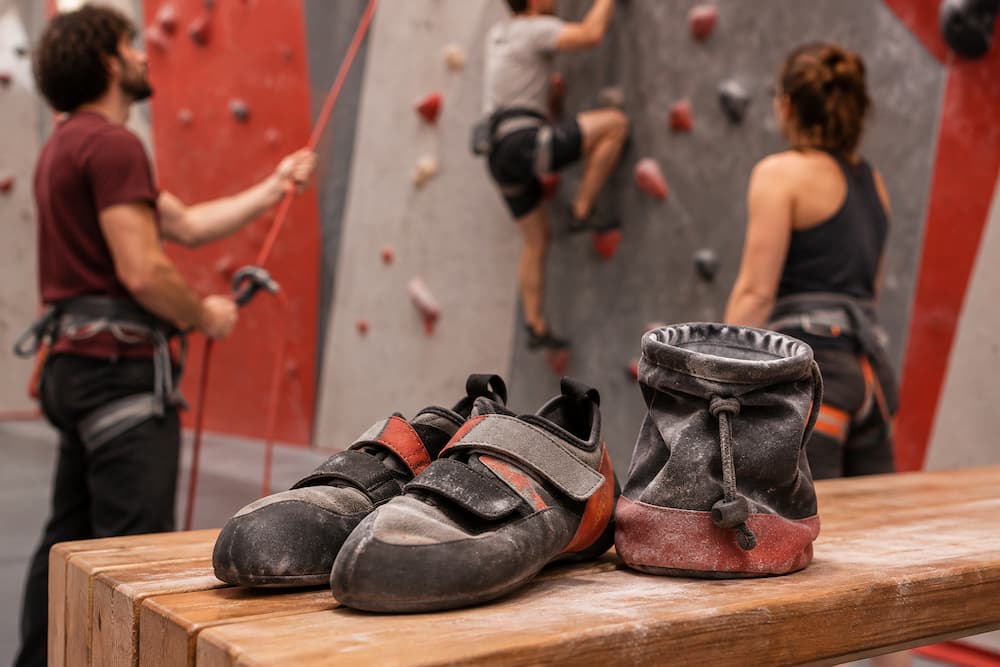
You can hire everything you need for roped climbing: a full set of shoes, harness and belay device is £8.00. If you bring your own, staff may ask to check it.
Choosing your route in
- Start with an auto-belay or a guided roped intro. You’ll get a feel for height and ropes without needing a partner.
- Learn to belay when you’re ready to climb with a friend.
- Practise on top-rope until you’re comfortable on the wall and with ropework.
- Learn to lead when you want a new challenge: from age 16, with a course and check.
Whatever you choose, take your time. Roped climbing is safe when done properly, and a patient approach pays off.
Practise it with us
Reading about climbing helps, but instruction makes it stick. Try a beginner session, join an adult class or ask about private coaching. These guides are general information and are not a substitute for instruction: always follow the centre rules and staff instructions.